MindGarden: AI Mental Wellness Companion
A gamified AI wellness app built in 24 hours. Finalist among 87 teams at ODSC x Google Cloud Hackathon.
Project Background
At the ODSC x Google Cloud Hackathon, my team set out to tackle a challenge: How might we use AI to support mental wellness in a way that feels personal, not clinical?
We had 24 hours to go from idea to working prototype.
My Roles & Responsibilities
As PM & Lead Developer, I was in charge of:
- Defining the product concept and core features under extreme time pressure
- Designing the multi-agent AI architecture (7 specialized agents behind one coordinator)
- Building the React Native + Expo frontend and FastAPI + Python backend
- Integrating Google Gemini API for personalized insights and CBT-based analysis
- Presenting to judges
The Key Problem
How might we make mental wellness tracking feel rewarding rather than like a chore?
Insight: Most mental health apps feel clinical and boring. Users download them, use them for a week, then abandon them. We hypothesized that gamification could drive engagement. If tracking your mood felt like nurturing something alive, you'd actually want to come back.
The Solution
MindGarden is a mobile app where your mood grows a virtual garden. Log how you're feeling, and watch your plants flourish. Behind the scenes, a Coordinator Agent orchestrates 7 specialized AI agents to deliver personalized CBT insights, journaling prompts, wellness recommendations, and daily affirmations, all powered by Google Gemini.
Key Features
Emotion Garden
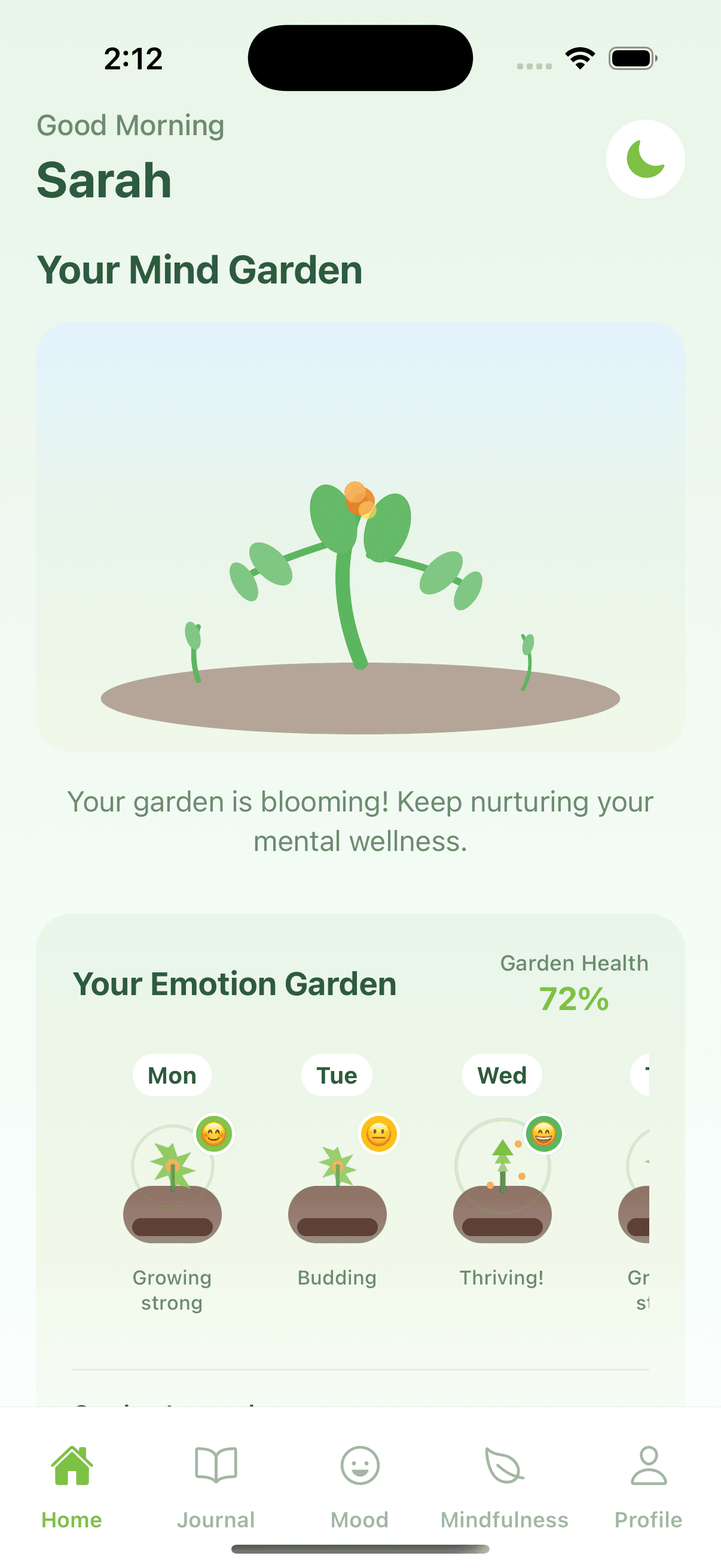
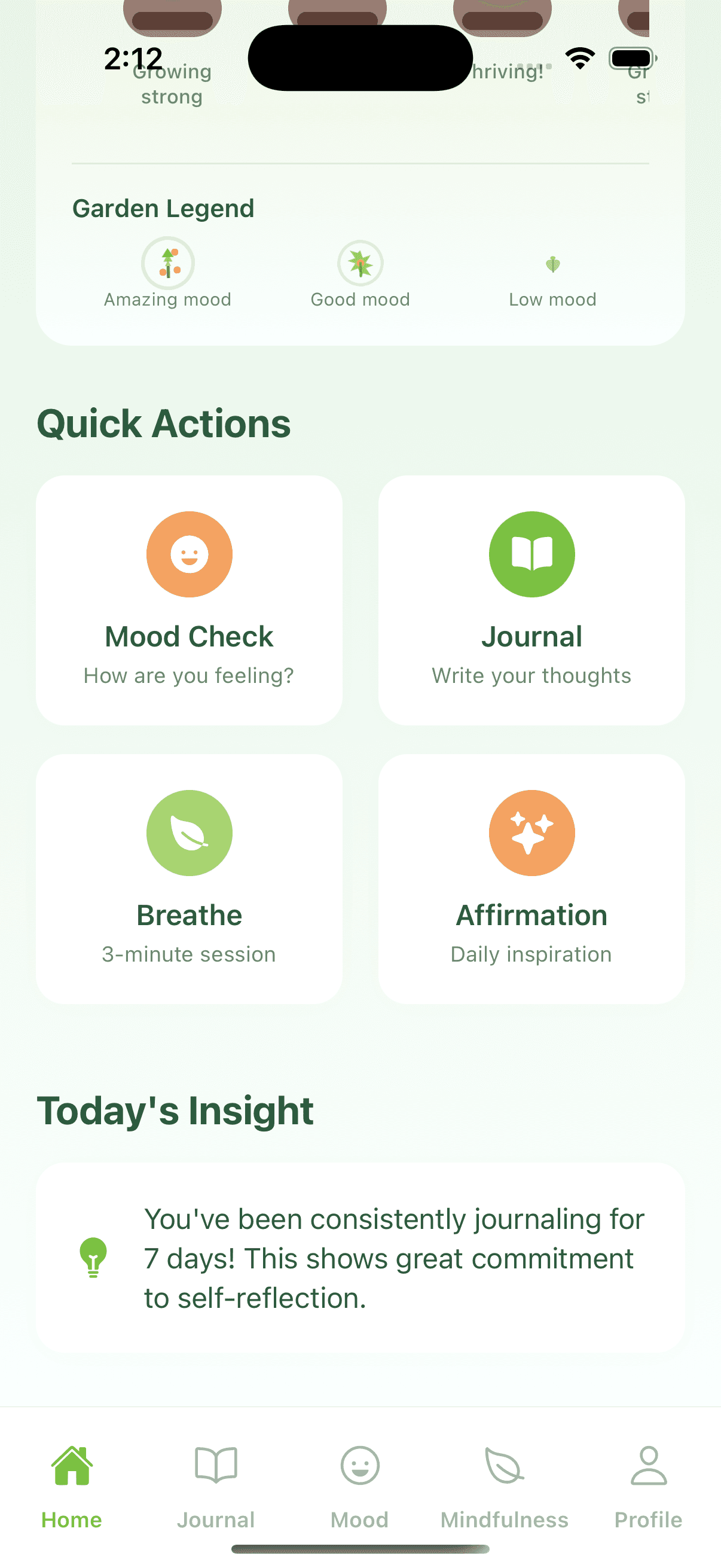
The core gamification mechanic. Your moods grow virtual plants in a 7-day scrollable garden view, one plant per day, each reflecting how you felt:
- Mood 1–2 (low) → Sprout with red/orange coloring
- Mood 3 (neutral) → Flower with yellow coloring
- Mood 4–5 (good) → Tree with green coloring
The garden calculates a Health Score as a percentage, with growth messages that evolve as you log more: "Just planted" → "Sprouting" → "Budding" → "Growing strong" → "Thriving!"
This mapping was a deliberate design decision. Abstract feelings are hard to track, but watching a plant grow from a sprout to a tree makes emotional progress tangible and rewarding.
7 AI Agents
Instead of one monolithic AI, we designed a multi-agent system where each agent has a focused responsibility:
| Agent | What It Does |
|---|---|
| Mood Agent | Analyzes mood patterns across entries and detects negative spirals (3+ consecutive low moods) |
| Journal Agent | Generates 5 personalized writing prompts daily based on recent mood patterns and journal history |
| Wellness Agent | Delivers CBT-based coping strategies and rotating wellness tips |
| Cognitive Agent | The most advanced agent. Queries the database for mood and journal history, then sends complex Gemini prompts that analyze cognitive distortions, stress patterns, and emotional triggers. Returns structured CBT-style coping mechanisms. |
| Garden Agent | Translates mood data into garden growth states and visual feedback |
| Goal Agent | Suggests personalized wellness goals and tracks progress |
| Affirmation Agent | Generates daily affirmations tailored to current mood and recent journal themes |
The Cognitive Agent deserves special attention. Most AI wellness features are shallow: "you seem stressed, try breathing." Ours actually queries the user's mood history and journal entries, identifies patterns (e.g., "mood drops every Sunday evening"), and returns structured CBT analysis with specific coping mechanisms. It's the difference between a chatbot and a tool that actually understands you.
Coordinator Agent Pattern
The 7 agents don't work in isolation. A Coordinator Agent orchestrates them all. The frontend talks to one endpoint, and the Coordinator routes requests to the right agent, manages shared context, and ensures responses are coherent.
This was a key product decision: users don't need to know there are 7 agents. The UX is simple: log your mood, read your insights, tend your garden. The intelligence is entirely behind the scenes. This pattern also made development faster: each team member could build an agent independently without stepping on each other's code.
Real-Time Mood Visualization
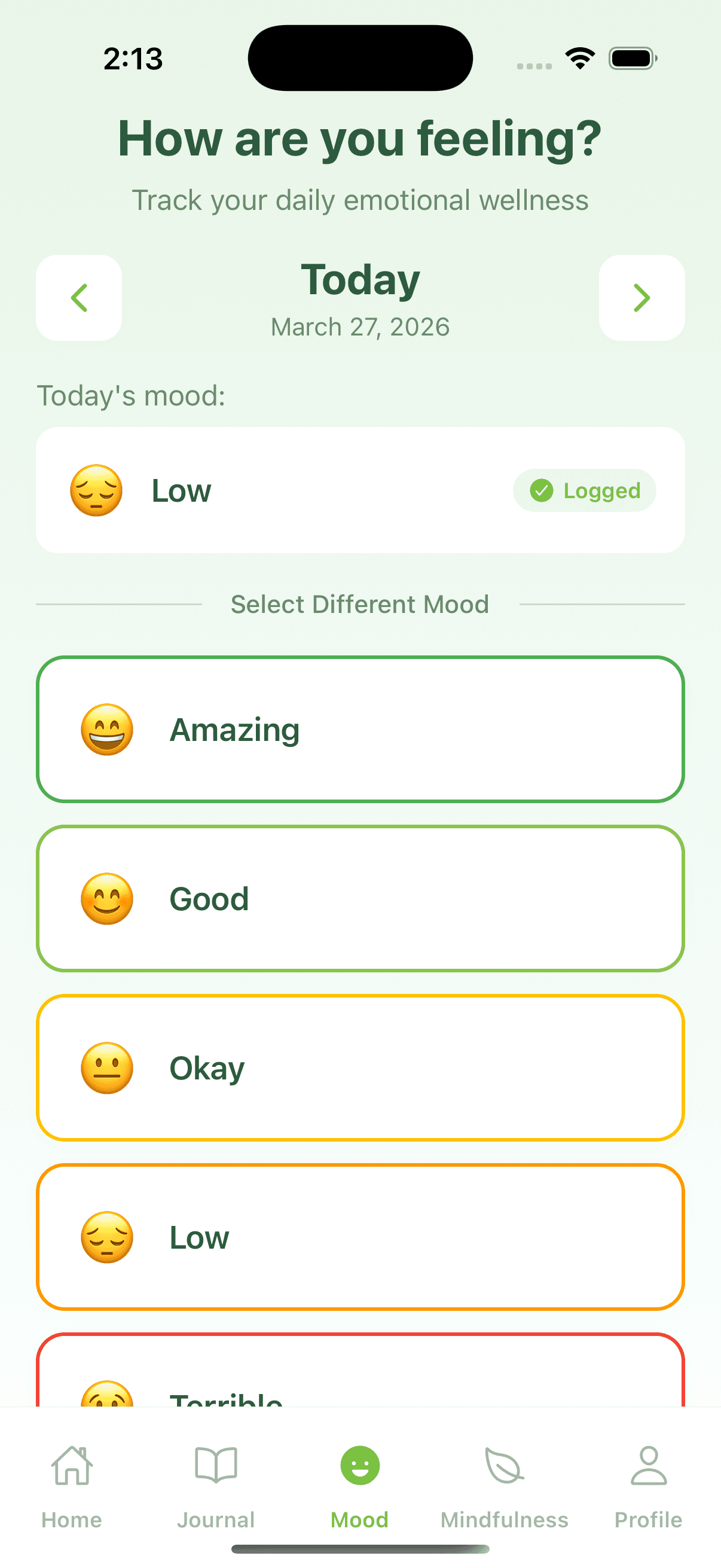
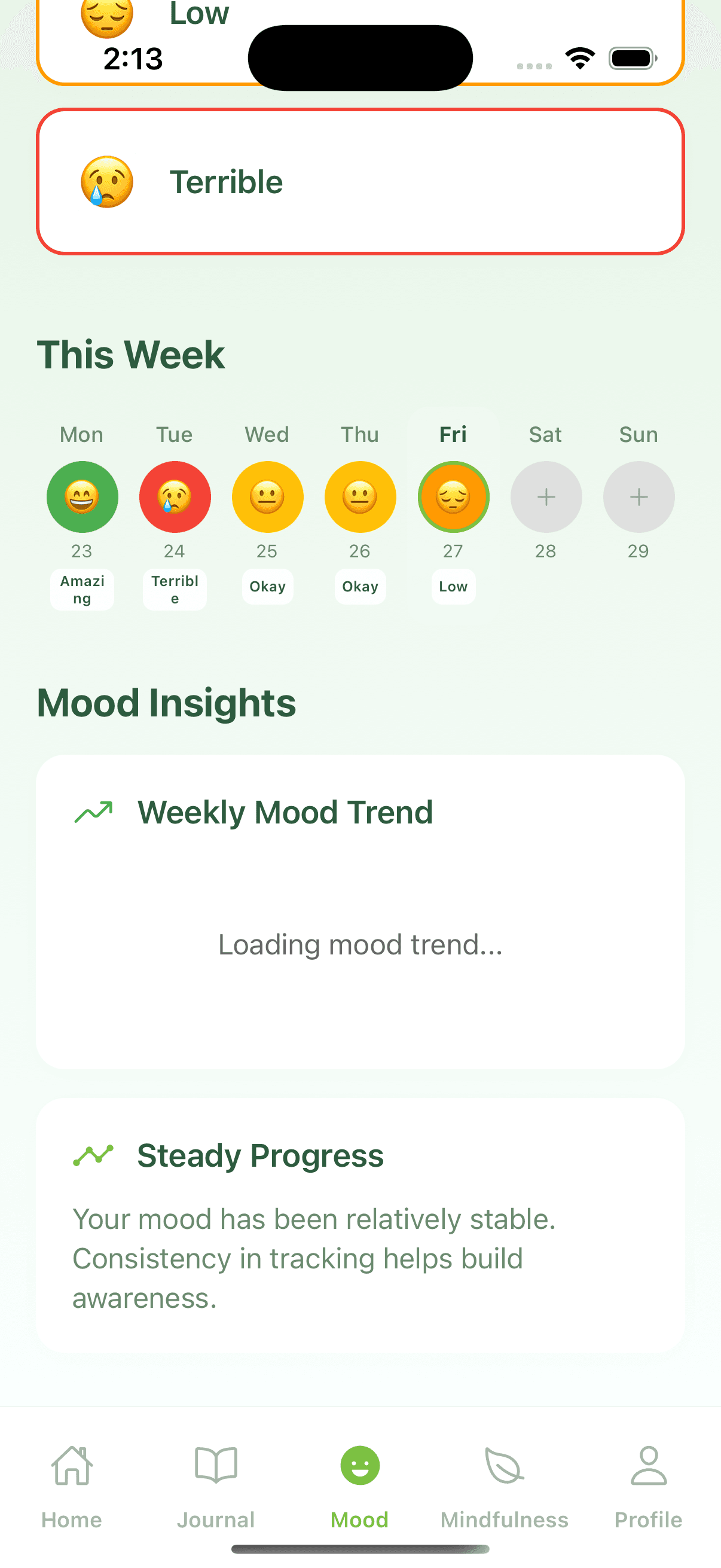
Mood trends displayed as interactive charts showing patterns over time. The charts update immediately after logging, giving users instant feedback on their emotional trajectory.
AI-Powered Journaling
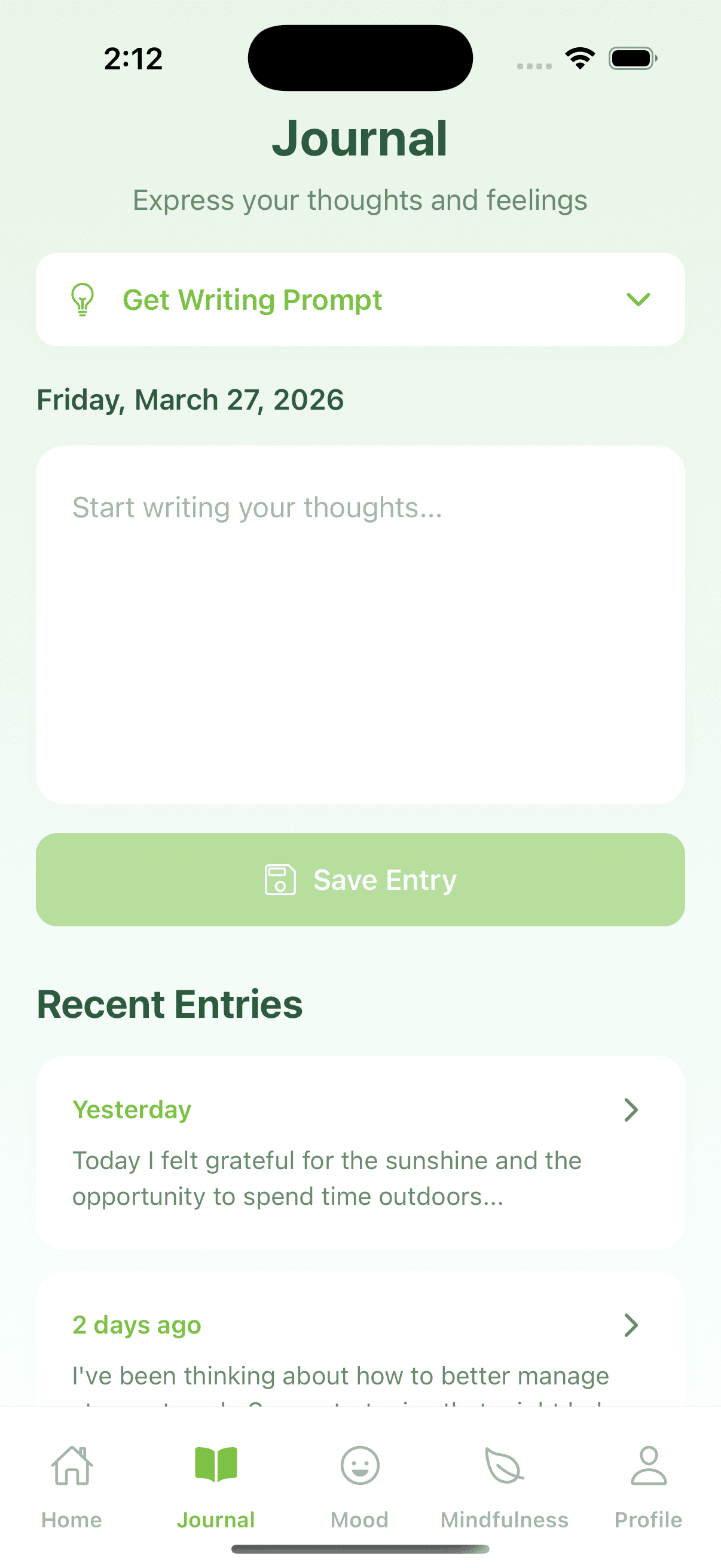
Personalized writing prompts generated by the Journal Agent based on your recent mood patterns and past entries. After writing, the app analyzes sentiment, creating a feedback loop where your journal entries make future prompts more relevant.
Mindfulness & Breathing
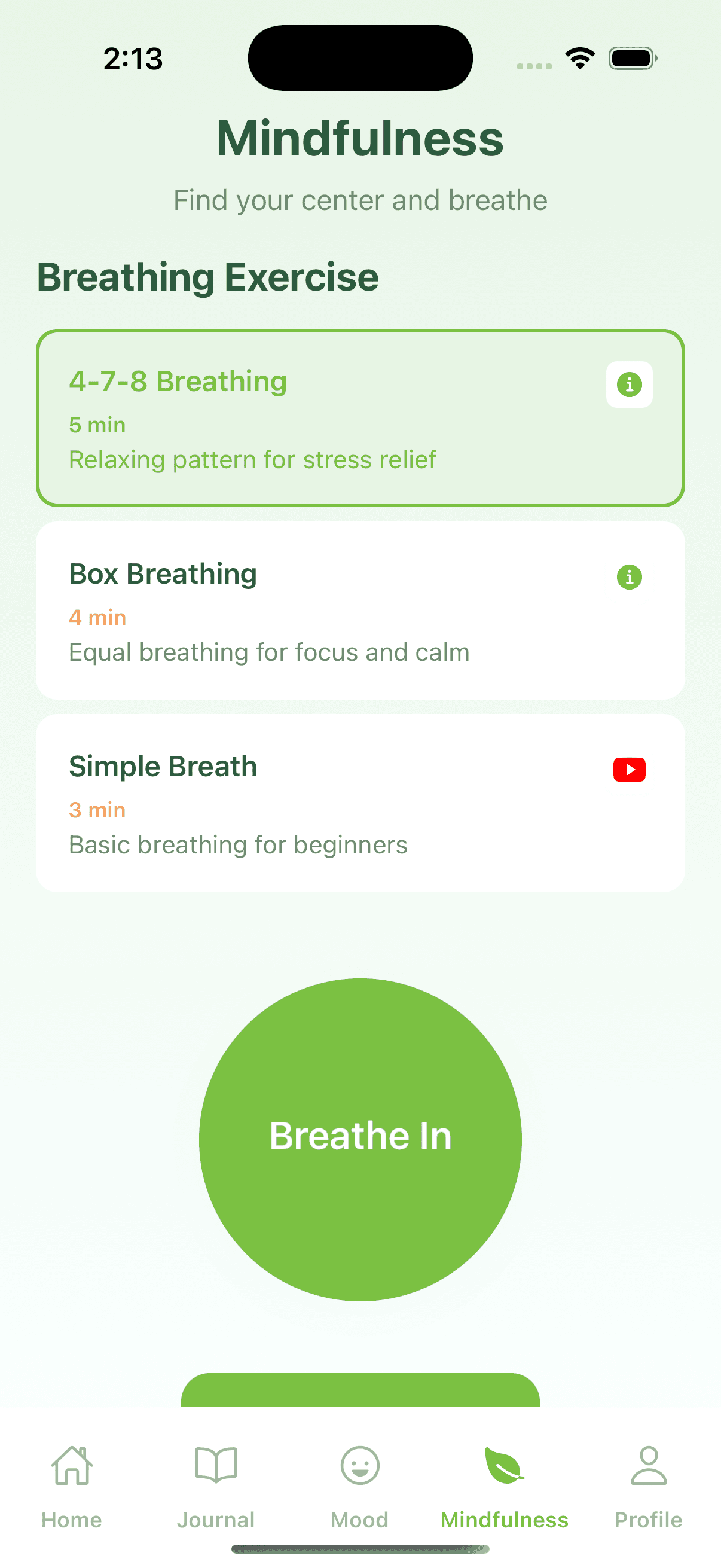
Guided breathing exercises (4-7-8 pattern, Box Breathing) with visual guides and streak tracking to encourage daily practice.
What We Built in 24 Hours
The scope of what we shipped in a single day:
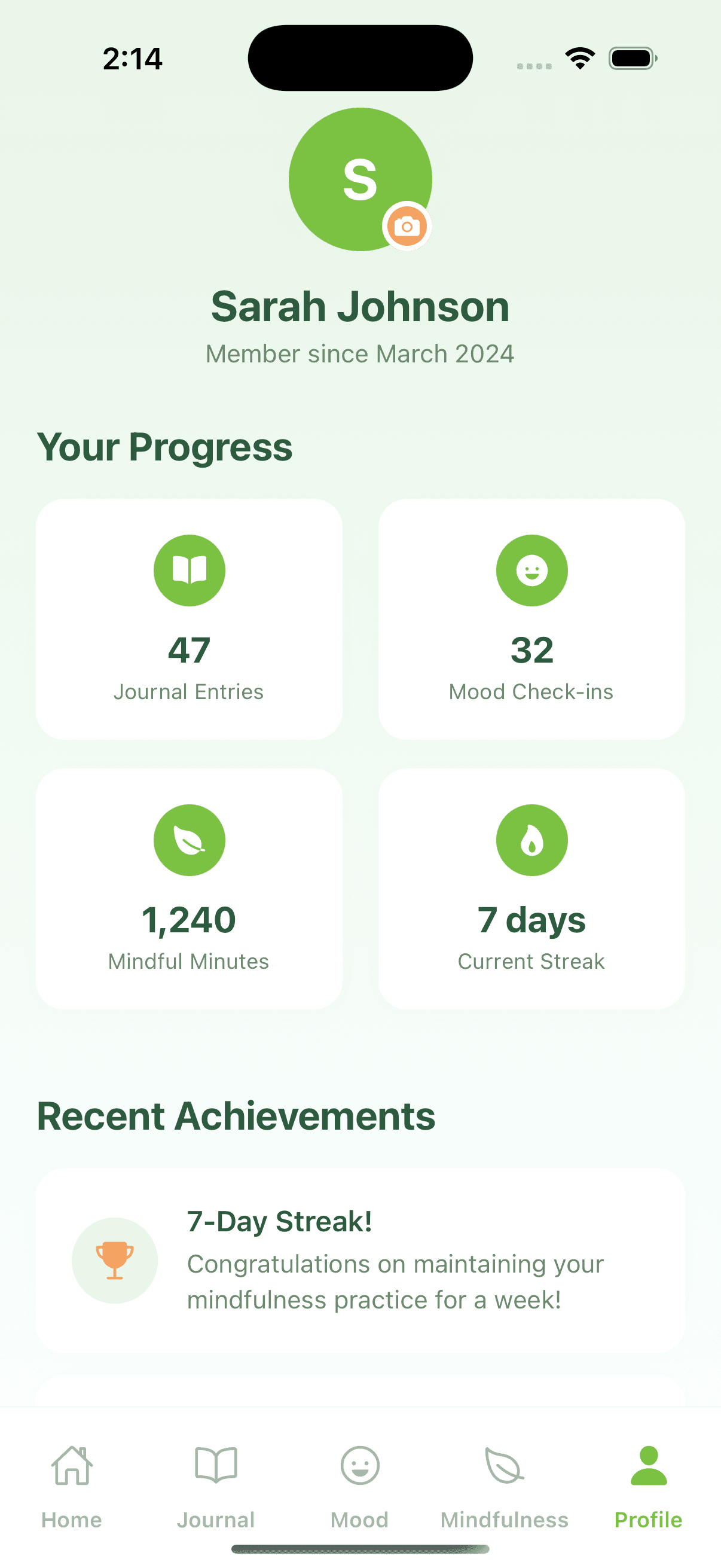
- 6 screens: Home (garden + dashboard), Mood Tracking (1–5 emoji scale), Guided Journaling, Mindfulness (breathing exercises), Profile (achievements + streaks), Affirmations
- 7 AI agents with a Coordinator orchestrating them all
- 10 API endpoints covering mood check-in, weekly trends, journal prompts, cognitive support, insights, wellness tips, goals, garden status, and affirmations
- 4 database tables: users, moods, journal_entries, insights (Supabase PostgreSQL)
- Full tech stack: React Native + Expo (frontend), FastAPI + Python (backend), Google Gemini API (AI), Supabase (database)
Every architectural choice was driven by the 24-hour constraint. We chose FastAPI because Python lets you prototype AI integrations fast. We chose Expo because one codebase covers iOS and Android. We chose Supabase because it gives you a Postgres database with auth in minutes, not hours.
Result
Selected as Finalist among 87 teams.
The judges highlighted two things: our innovative use of multi-agent AI architecture (most teams used a single LLM call) and the gamification approach that made mental wellness feel approachable rather than clinical.
Takeaways
- Constraints breed creativity. 24 hours forced us to ruthlessly prioritize. We cut features that weren't essential to the demo, and the product was better for it.
- Gamification works when it's honest. The Emotion Garden resonated because it reframed a serious topic (mental health) into something approachable. But it only works because the underlying data is real: your garden reflects your actual mood, not just engagement metrics.
- Multi-agent architecture scales. The Coordinator pattern let us add new capabilities (Goal Agent, Affirmation Agent) without touching existing agents. This modularity was key to shipping 7 agents in 24 hours, each team member owned their agent.
- The most impactful AI is the most connected. The Cognitive Agent was our strongest feature because it connected data across mood entries and journal history to find patterns. AI value comes from connecting data, not just generating text.